Drying & Storage
Moisture is the failure nobody photographs. How to measure it and fix it.
Wet filament is the failure that gets blamed on everything else. Stringing, popping, weak layers, rough surfaces — all get chased through retraction settings first, and the spool is the cause more often than the settings are.
What moisture actually does
Filament absorbs water from the air. At the nozzle that water flashes to steam, blows the extrudate apart from the inside, and leaves a foamed, rough, weak strand. The audible pop or hiss during extrusion is that steam.
You cannot tune this out. A dry spool at bad settings prints better than a wet spool at perfect ones.
Not all filaments care equally
| Material | Absorption | Drying |
|---|---|---|
| PLA | Mild | 45–50 °C |
| PETG | Moderate | 60–65 °C |
| ABS / ASA | Moderate | 70–80 °C |
| Nylon | Severe | 70–80 °C |
| TPU | High | 50–55 °C |
Nylon can pick up enough moisture to be unprintable in a single humid afternoon on the bench. PLA takes weeks and shows it mildly.
The rule that sets every temperature
Dry below the glass transition temperature. Above it the filament softens and the coils fuse into a solid block that will not feed — a spool destroyed more thoroughly than moisture would have managed.
That is the argument against a kitchen oven: domestic ovens cycle their elements and overshoot the set point by tens of degrees, which is invisible when baking and fatal at 55 °C.
Drying is the repair. Storage is the fix.
A dried spool left on the bench is back where it started within days. Sealed container, fresh desiccant, and the desiccant regenerated rather than assumed — silica gel that has been in a box for a year is doing nothing at all.
The pages below cover the method, the temperatures, and the equipment question.
4 articles
 Wet Filament — Popping, Steam, and a Surface That Went Rough Overnight
A spool that printed perfectly last month and produces rough, weak parts today has not changed chemically. It has absorbed water.
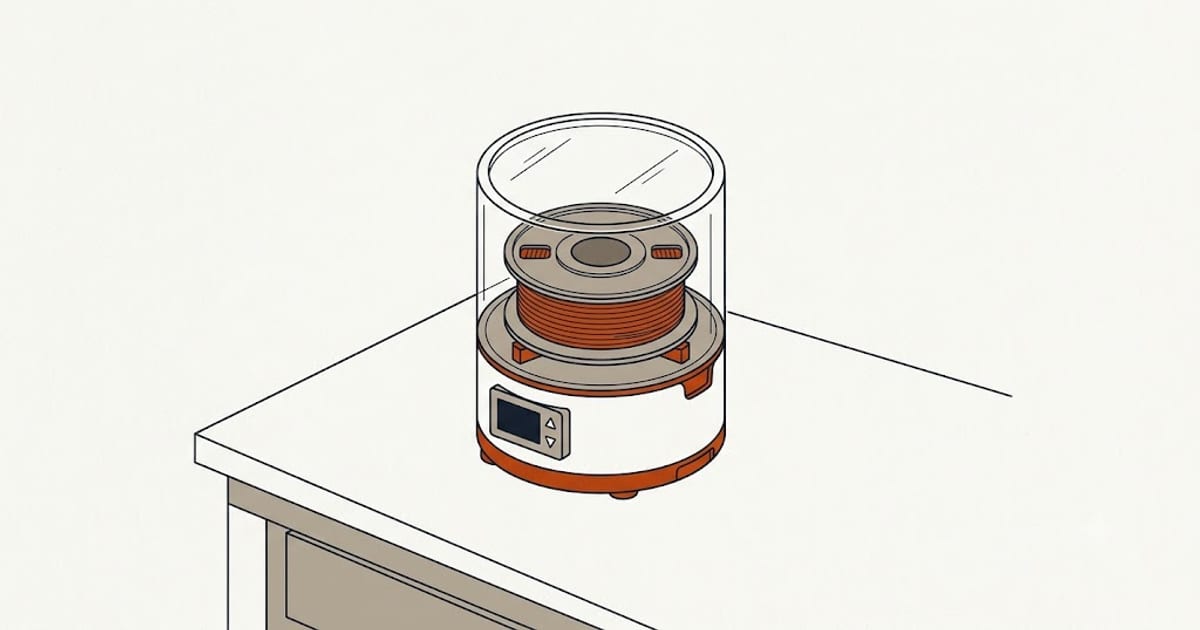 Filament Dryer or Food Dehydrator? One Costs More and Does One Thing Better
A dehydrator does the same physics for less money. What the purpose-built unit adds is the ability to print straight out of it, which matters for exactly two materials.
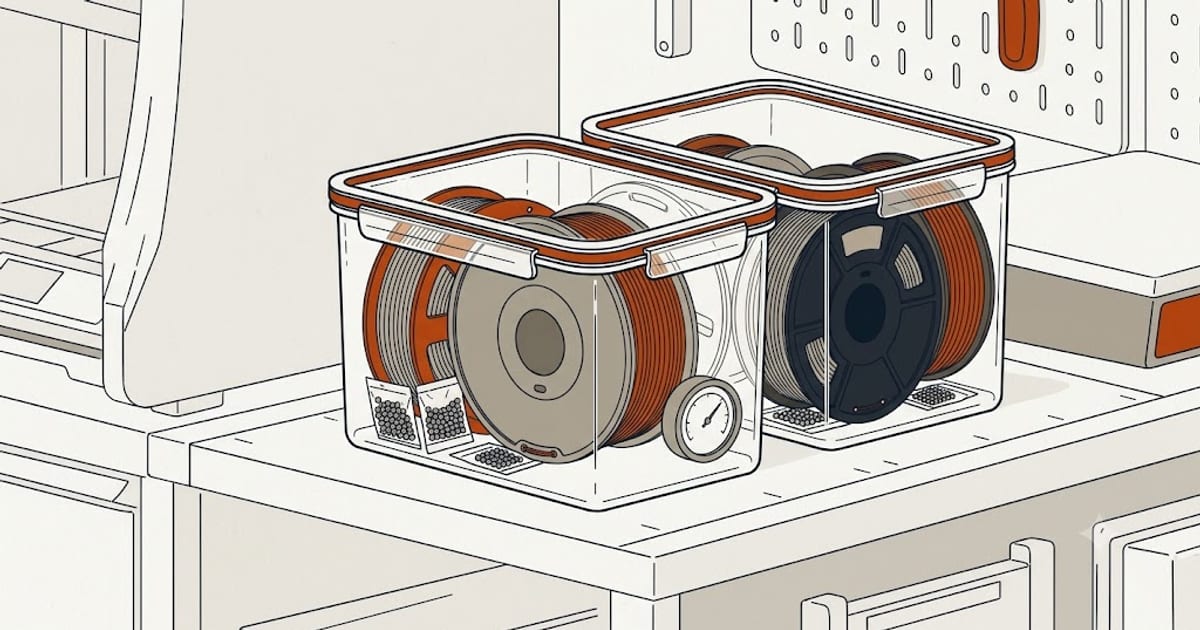 Storing Filament: Drying Is the Repair, Storage Is the Fix
A dried spool starts reabsorbing water the moment it leaves the dryer. Storage decides whether that took two days or two years.
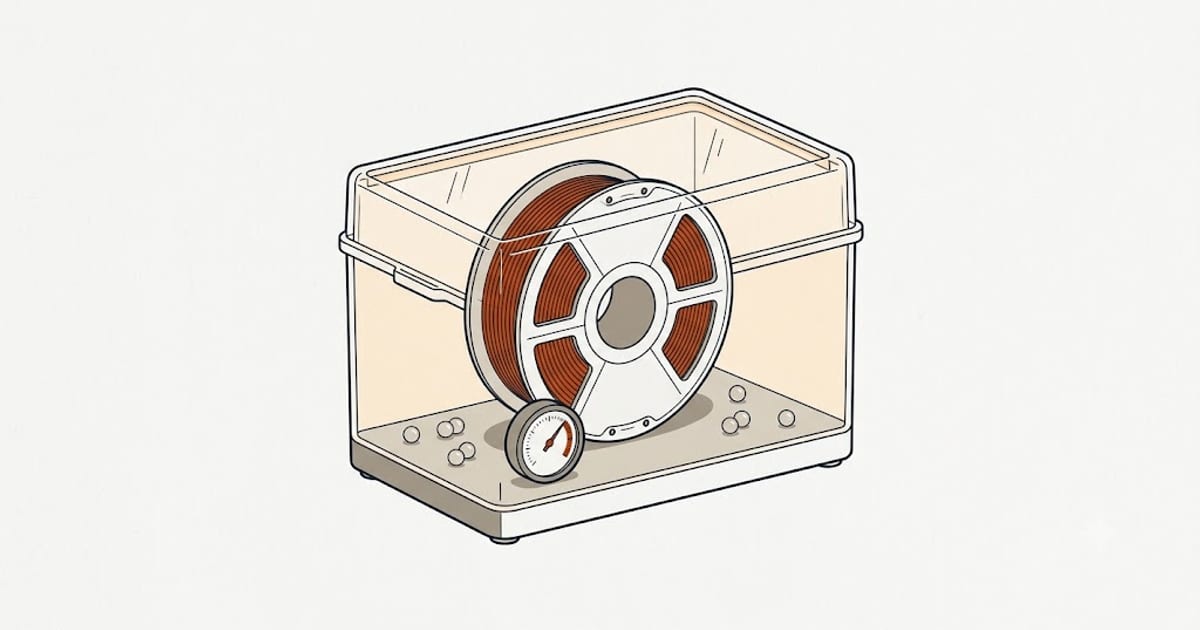 How to Dry Filament: Temperatures by Material, and Why the Oven Is a Bad Idea
Wet filament produces symptoms people spend days blaming on retraction and temperature. The tell is audible, the fix is a few hours, and the temperature you dry at is set by a property of the plastic.