Cost & Spools
What a print actually costs: grams, meters, and the price per part.
Three things cost money on a print, and one of them is over 90% of the answer.
Where the money goes
Filament. A 1 kg spool of 1.75 mm PLA is about 330 metres of material. A slicer reports both grams and metres; grams is the one to price, because filament is sold by weight and diameter tolerance makes length approximate.
part cost = grams used × (spool price ÷ 1000)
At $22 a kilogram, a 40 g part costs 88 cents. That is the whole calculation for most prints.
Electricity. A desktop FDM printer draws 50–120 W averaged over a job — mostly the heated bed. Ten hours at 100 W is 1 kWh. At typical residential rates that is a few cents. It is real and it is negligible next to material.
The one nobody counts: failures. A print that fails at 80% has consumed 80% of the material and all of the time. On a printer that fails one job in ten, effective material cost is ~11% higher than the slicer says, and time cost far more than that.
| Line | Share of a typical part |
|---|---|
| Filament | 85–95% |
| Electricity | 2–5% |
| Nozzle and bed wear | Small but real |
Why the cheapest spool often is not
Price per kilogram compares two spools only if both hold a kilogram of usable material. Diameter tolerance, spool weight sold as filament weight, and moisture that arrives in the box all cut into what you can actually print.
A spool at 15% under-delivery is more expensive than one 10% dearer per stated kilogram.
Machine time is the number that changes the answer
For a hobby printer, time is free and material dominates. For anyone printing to sell, machine hours carry the amortised cost of the printer and become the larger line. The same part has two honest costs depending on which you are.
3 articles
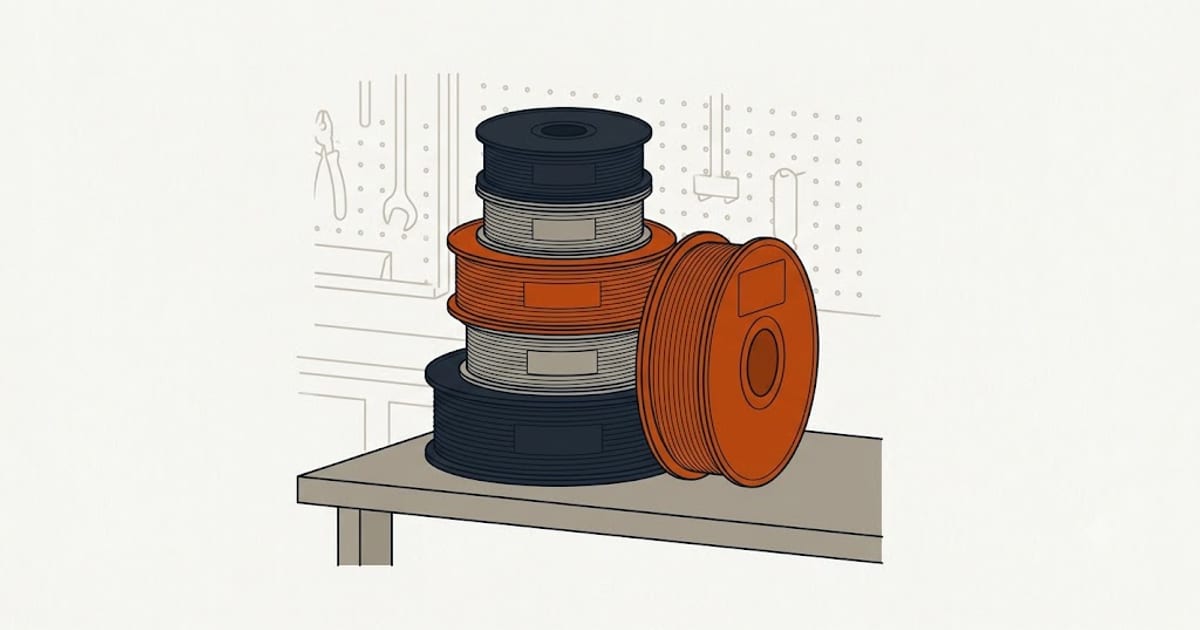 Filament Prices by Material — and Why the Cheapest Spool Is Rarely the Cheapest
Material price varies about fivefold across common filaments and it is almost never what decides the cost of a project. Failure rate is.
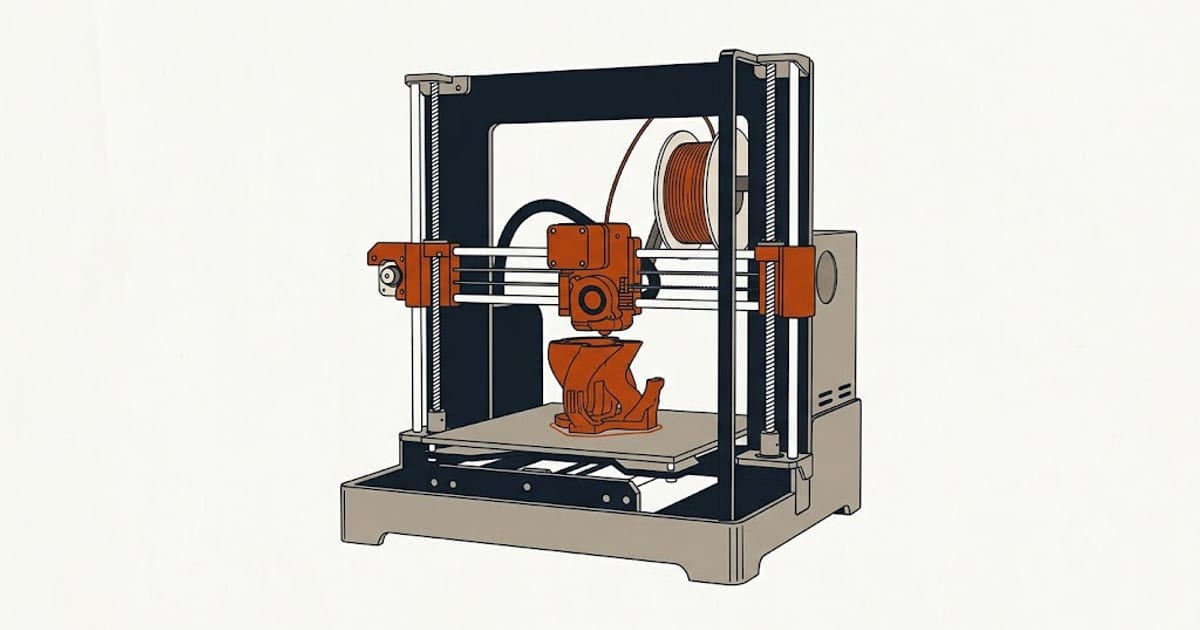 What Does 3D Printing Cost per Hour? Material Dominates, Time Barely Registers
People price prints by time because time is what the slicer shows. Almost none of the cost lives there.
 What a 3D Print Actually Costs: Filament, Electricity and the Part Nobody Counts
The material cost of a print is simple arithmetic. The number people get wrong is not the arithmetic — it is which costs matter, and electricity is not one of them.